.png)
Understanding the Impact of 5G on IoT: What’s Nextfor Connected Devices?

Understanding the Impact of 5G on IoT: What’s Next for Connected Devices?
As 5G technology evolves, the entire IoT landscape will transform due to higher speeds, lower latency, and a better connection. 5G, which promises to unleash the full power of IoT, will handle billions of devices. Let's see how 5G redefines the future of connected devices and what we can expect in the near future.
1. Faster Data Speeds for Seamless Connectivity

One of the main advantages of 5G is ultra-fast data speed, as it will be up to 100 times faster compared to the 4G network. This makes real-time communication possible for IoT devices, which could transfer big data volumes. For example, smart homes can work more efficiently because multiple cameras, sensors, and thermostats can run in perfect harmony with no no lag. Higher speeds also correspond to much better performance for wearables and smart vehicles.
2. Ultra-low latency for real-time responses

Latency will decrease dramatically in 5G because it will decrease the time for data to travel between devices. In this case, ultra-low latency will become essential for applications where responses are required in real time. For example, an autonomous vehicle would need instantaneous communication between its sensors and traffic systems for safety purposes. In healthcare, 5G IoT devices advocate for remote surgeries and monitor patients' situations in real-time, changing medical care.
3. Mass IoT Growth

The massive capacity of 5G networks to support tens of millions of devices simultaneously makes them ideal for the growing Internet of Things (IoT). For instance, cities increasingly depend on smart infrastructure that includes connected systems for traffic management, waste management, and energy supply distribution.
This scalability also extends into various fields, enabling the integration of IoT sensors in precision farming, which can enhance crop yields and promote sustainability.
4. Increased Reliability and Network Robustness

4G cannot be compared to the reliability and stability offered by 5G. The reason behind this reliability is that 5G ensures that IoT devices can properly function in densely populated areas without interference or breakdowns in service. In industrial IoT, this means more efficiency in factories and warehouses where these connected machinery and robots work continuously on unbroken communication.
5. Energy Efficiency for Longer Device Lifespan
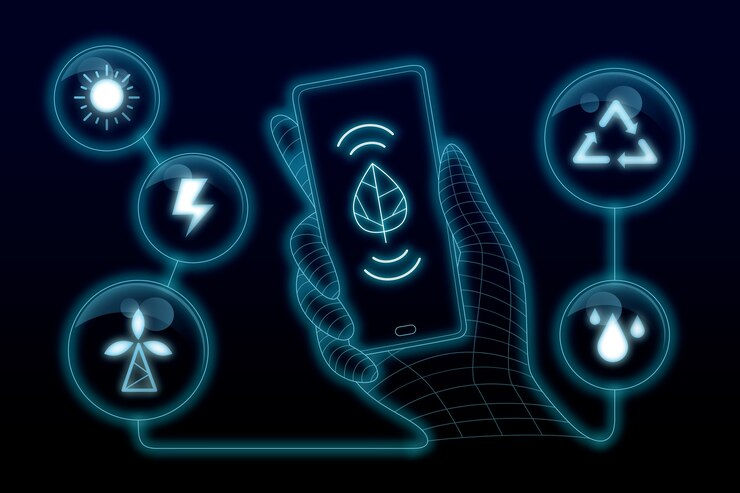
IoT devices running on 5G networks can optimize energy consumption, leading to longer battery life. It is essential for devices such as sensors, wearable devices and similar technologies that have to function continuously for years. Less maintenance is needed, and sustainable IoT deployment is supported from the perspective of energy efficiency.
6. Enabling Innovations in IoT Applications

The synergy of 5G and IoT enables innovative applications. For instance:
Smart Healthcare: With 5G-enabled IoT, remote surgeries, wearable health monitors, and AI-driven diagnostics are highly feasible.
Autonomous Systems: Self-driving cars and drones can be more accurate due to faster and more efficient connectivity.
Augmented Reality (AR) and Virtual Reality (VR): 5G can power immersive IoT experiences in education, gaming, and training simulations.
Challenges and the Road Ahead
Despite a very promising future, the 5G rollout poses challenges such as infrastructure requirements and high implementation costs. The benefits may take much longer to arrive in the rural areas. IoT deployments will also need defence mechanisms to protect from cyberattacks since the networks are destined to be hyper-connected.
The integration of 5G and IoT will fundamentally change the way we interact with technology and our surroundings. It will not only improve current IoT applications but also create new ones by enabling the transfers of data at much faster rates, having lower latency and vast device connectivity, but all that will only be possible if we succeed in an efficient deployment of 5G along with consideration of all the possible threats related to it.


Comments