.png)
Building IoT Solutions: A Beginner's Guide to Starting with Connected Devices

The Internet of Things is a revolution in the way that devices interact and share information. IoT solutions are creating new opportunities for innovation and efficiency from smart homes to industrial automation. If you are new to IoT and wondering where to start, this guide will help you understand the basics and lay the foundation for building your first connected device solution.
1. Know the Fundamentals of IoT
IoT means a network of devices, ranging from simple sensors to complex machines, which collect, exchange, and act on data through the internet.

Understand the main elements of IoT before venturing into its development:
● Devices and Sensors: They collect data from the environment (for example, temperature, and motion).
● Connectivity: The way they transfer data, including Wi-Fi, Bluetooth, and others.
● Cloud Platforms: Store and analyze the data collected by devices.
● User Interfaces: Allow users to monitor and control devices (e.g., mobile apps).
2. Define Your Use Case

Every successful IoT solution starts with a clear objective. Ask yourself:
● What problem am I solving?
● Who will benefit from this solution?
● What type of data needs to be collected and acted upon?
For example, if you are building a smart home system, you may focus on automating lighting, monitoring security, or optimizing energy use. Having a clear use case helps streamline the development process and ensures your solution addresses real-world needs.
3. Select the Right Hardware

The hardware you choose forms the backbone of your IoT solution. Key components include:
● Microcontrollers or Microprocessors: It can be Arduino or Raspberry Pi. These are essentially the brains of your IoT device.
● Sensors and Actuators: Sensors collect data, and actuators perform actions based on that data, such as opening a valve or triggering an alarm.
● Communication Modules: These include Wi-Fi, Bluetooth, or Zigbee modules. These modules make it possible for devices to connect to the internet.
Select hardware based on your use case, budget, and technical requirements.
4. Select an IoT Platform
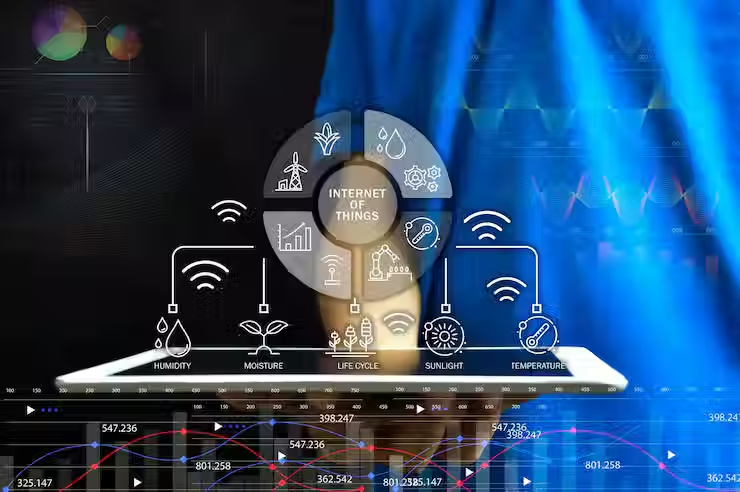
IoT platforms make it simple to connect your devices, store data and create user interfaces. Common platforms include
● AWS IoT Core: Highly scalable, secure cloud service.
● Google Cloud IoT: Advanced analytics as well as lots of integrations.
● ThingsBoard: Open-source place for making a prototype and low-scale projects.
Select one that fits best with project size, level of technical ability, and your budget.
5. Keep it Connected

Connectivity is a critical aspect of IoT. Your devices need a reliable means of sending and receiving data. Common communication protocols are as follows:
● Wi-Fi: Perfect for home-based IoT applications.
● Bluetooth: Good for short-range communication.
● LoRaWAN and NB-IoT: Geared towards long-range low-power applications such as farm or industrial monitoring. Depending on your project's requirements regarding data volume, distance, and power consumption choose the best option for yourself.
6. Software Development and Testing

IoT solutions need software that collects, analyzes, and responds to data. Key steps include:
● Writing firmware for your devices to communicate with the cloud.
● Developing a user interface (mobile or web app) for monitoring and control.
● Implementing data analytics to derive insights from the collected information.
Testing is vital at every stage to ensure your system functions as expected under various conditions.
7. Security

IoT devices are highly susceptible to cyberattacks, so security is always the priority. Implement the following measures for prevention:
● Data Encryption: Protect data in transit and at rest.
● Authentication Mechanisms: Ensure only secure logins can access the device.
● Regular Updates: Keep firmware and software updated to address vulnerabilities.
By focusing on security, you will protect user data and gain their trust in your solution.
8. Scale and Optimize
Once your IoT solution is functional, consider scaling it for broader applications. Focus on optimizing:
● Device Performance: Use energy-efficient components to extend battery life.
● Cloud Usage: Leverage analytics to improve efficiency and reduce costs.
● User Experience: Continuously update and refine your interface based on user feedback.
Scaling ensures your solution remains relevant and effective as demand grows.
Building IoT solutions might seem daunting at first, but with a clear understanding of its components and a systematic approach, you can create impactful connected devices. Start small, experiment with existing tools, and learn from every step of the process. With the rapid evolution of IoT technology, the possibilities are endless for innovators willing to dive in.

Comments