
CONNECTED TECHNOLOGY. CLEARLY EXPLAINED.
Agriculture
Start with a crop, field and repeatable decision. Establish a trustworthy measurement before using it to change irrigation or inputs.
Industry evaluation · By Admin · Reviewed 18 October 2026. Original planning guidance; no farm installation or measured yield/water result is reported.
Start with a useful field decision
Agricultural IoT connects an observation to a grower’s decision under real soil, crop, power, weather and maintenance constraints. Start with a defined management zone and a responsible operator. The useful result is a contextualised observation that somebody can interpret and act on.
Observe soil and crop context
Choose the measurement that informs the actual decision. Document site variation, observation location/depth, crop stage and the evidence needed to interpret a reading.
Plan the field data path
Match power, radio/cellular coverage and local retention to the site. Separate a recorded observation from a timely remote view and make missing or stale data visible.
Keep an accountable operator
Name who reviews advice, approves an action and handles an outage. Field maintenance and the existing local procedure are part of the system, alongside the sensor and platform.
Connect the field, the record and the owner
1 · Site and observation
The grower and adviser identify a manageable zone, the decision and representative observation points. Record units, instrument identity and the calibration/reference-check basis before relying on a trend.
2 · Power and transport
The installation owner verifies power, coverage, local storage, timestamps and recovery. Test the agreed outage case under an approved procedure; a signal icon is not proof of usable delivery.
3 · Context and interpretation
Keep crop stage, relevant soil/location context, weather and actual field events with the observation. Identify which values are measured and which are calculated or recommended.
4 · Records and access
The data owner defines account roles, export, retention and recovery. Check access after a subscription or staff change. Share only the information needed for the agreed operating purpose.
5 · Advisory and local procedure
The named reviewer records the decision and reason, including conflicting or missing data. Keep any later controller integration separate until the actual interface, authority and local protections are designed and tested.
6 · Field service and review
The service owner maintains identification, cables, power and installation condition through the season. Review useful decisions, maintenance effort, actual costs and comparable observations before expanding.
Pilot example: soil-moisture informed irrigation
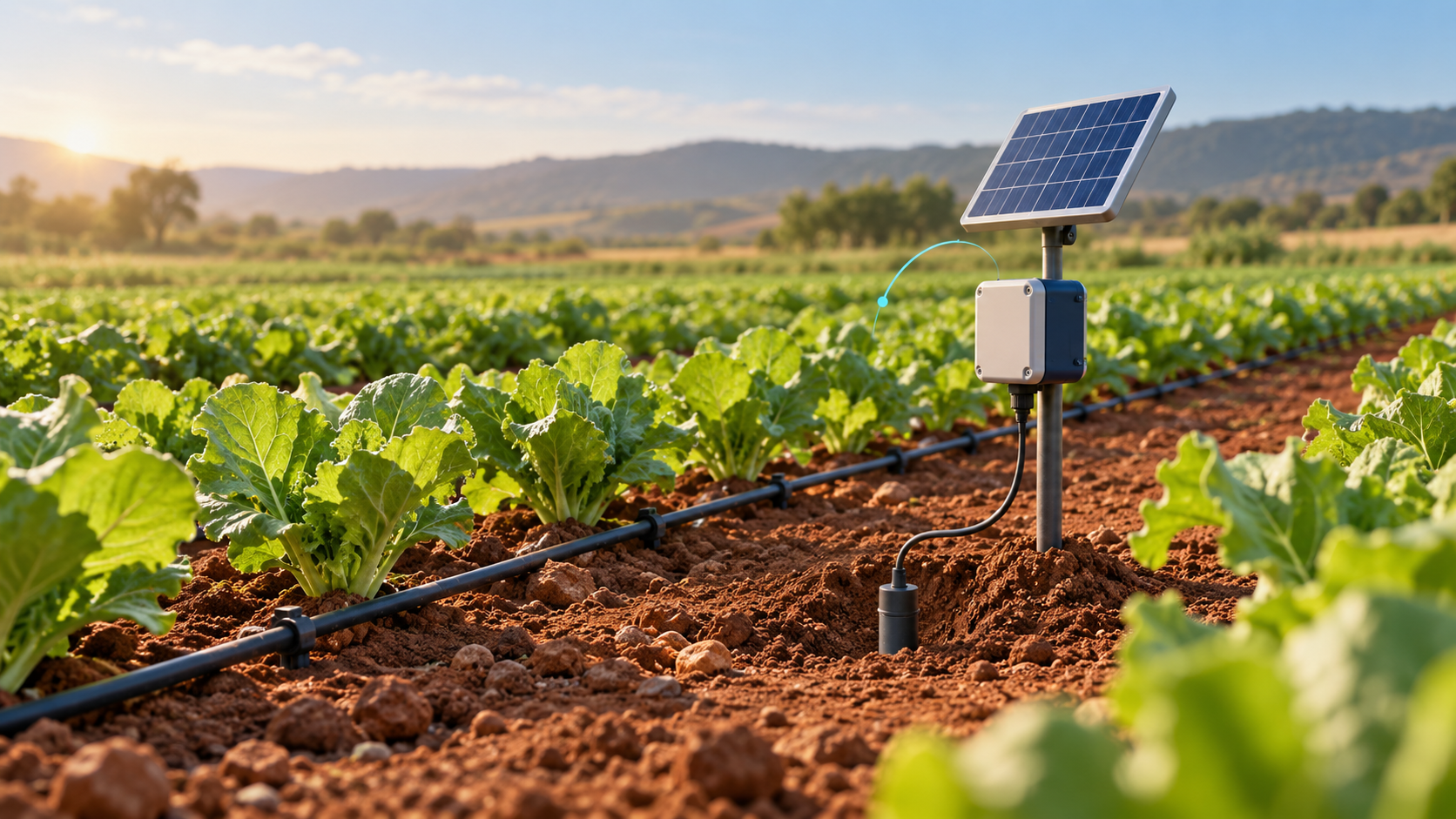
Begin with one representative management zone and an advisory workflow. Keep the measurement reference, crop stage, weather/application context and a named reviewer together. The soil-moisture advisory pilot covers six stages, pump-control boundaries, offline procedures and field maintenance. It reports no water saving or yield gain.
Choose an observation before choosing a platform
Specify the decision, measurement type, units, location/depth context and usable review window. Distinguish raw observations, calculated indicators, advisory recommendations and confirmed field actions. A broad platform description does not establish that all sensing, interpretation or control functions are included.
Keep local operating responsibility
Agronomic interpretation belongs to the responsible grower or competent adviser for the actual crop and site. A later pump/valve interface needs its own qualified design, authority limits, local protections, manual override and tested fallback. The initial observational pilot keeps the existing local operating procedure in service.
Budget for a full field season
Include installation, representative measurement points, power/connectivity, calibration/reference checks, agronomy support, subscriptions, field visits, damage/replacement and removal or reinstallation. Agree who services equipment during cultivation and harvest and how records remain comparable after a change.
Measure what actually happened
Track valid observations, data gaps, context-complete reviews, authorised actions and maintenance effort. Where appropriate metering exists, retain actual applied water with area, rainfall and crop/soil context. Keep vendor claims separate from comparable pilot evidence; a changing season alone does not establish an IoT benefit.
Sources and regional context
University of Minnesota Extension provides measurement/placement context. Agriculture Victoria’s selection guidance covers representative sensing, durability, labour and support; its page was updated in 2020. Use these as principles with local advice, not as current India product quotes or universal crop thresholds.
Prepare a non-confidential brief
Describe the field decision, crop/soil context, existing operating procedure, power/network constraints and support needs. Prepare a private requirements enquiry for Admin review, with optional onward-sharing consent. Keep exact field coordinates, credentials and private farm records out of the initial brief.
Agriculture research and practical reading

CONNECTED PROFILE
Agriculture & Environment
Plan soil, water, weather and environmental sensing around representative placement, maintenance and field decisions.

RELATED READING
Smart water management: measurements that support a response
A practical guide to connect this subject with a useful decision.
RELATED READING
Agriculture IoT: sensing, irrigation and field maintenance
A practical guide to connect this subject with a useful decision.

RELATED READING
Green IoT: include energy, maintenance and device lifetime
A practical guide to connect this subject with a useful decision.
USE CASE
Soil-moisture informed irrigation: an advisory pilot
A six-step advisory pilot: representative zones, useful context, named authority, offline fallback and field maintenance. No yield or saving claim.