
CONNECTED TECHNOLOGY. CLEARLY EXPLAINED.
Healthcare IoT
Understand connected health monitoring through intended use, measurement evidence, care workflows and access to sensitive records.
Connected healthcare involves a measurement and a care workflow. Before choosing hardware, identify the intended use, who interprets the reading and what happens when the device, connection or response process fails.
Start with the care workflow
Home monitoring
Follow the device instructions and the care team’s plan for reviewing readings.
Operational tracking
Distinguish locating equipment from establishing its clinical readiness.
Remote monitoring
Document who receives an alert, their coverage hours and the existing escalation route.
Explore the healthcare contexts
Home health monitoring
Start with the device’s intended use and the agreed way readings will be reviewed. Plan the person, device, record and response together.
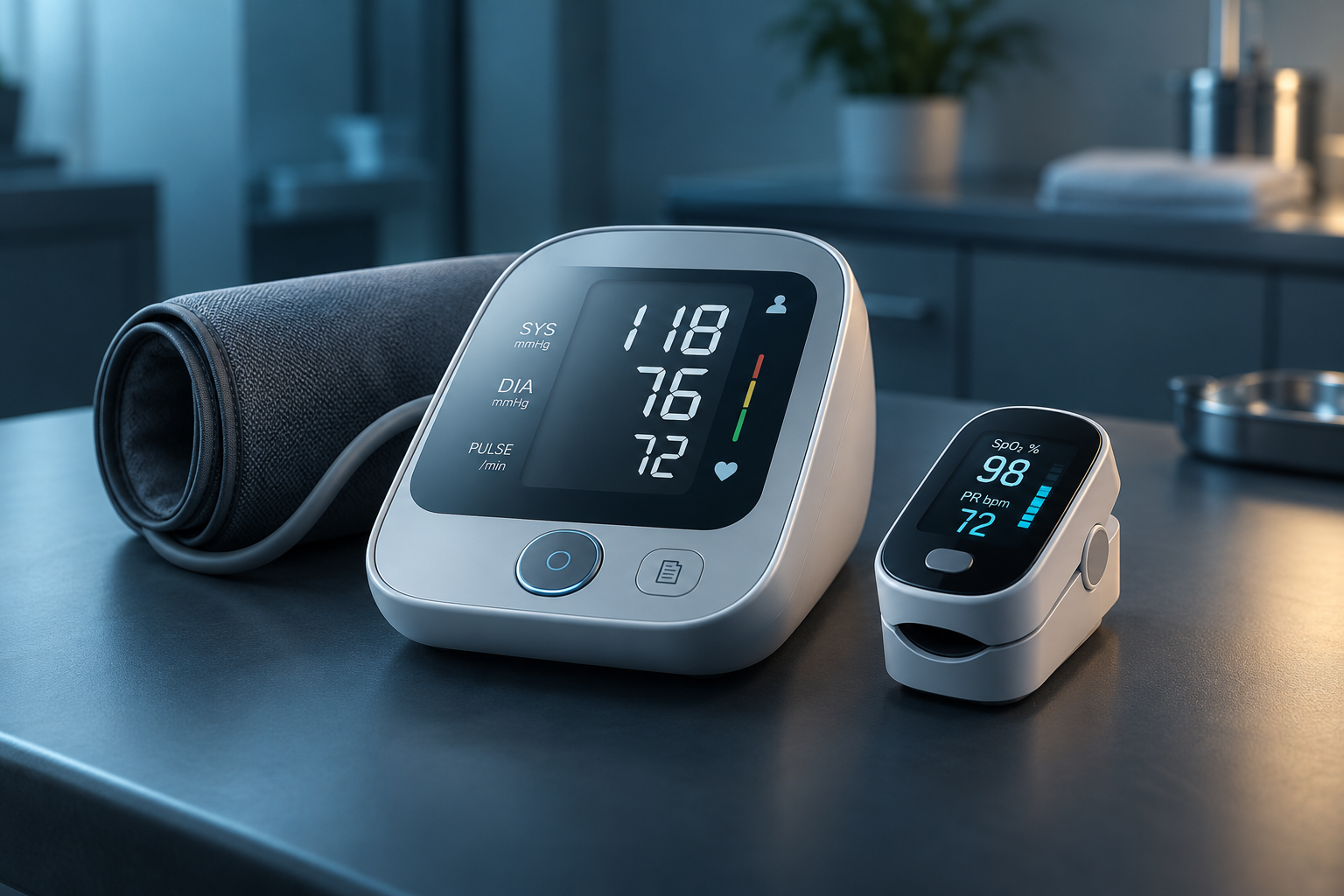
Blood pressure monitors · Pulse oximeters · Connected thermometers · ECG devices · Connected scales · Glucose monitoring devices.
Remote patient monitoring
Check the whole service: enrolment, data transfer, missing readings, staffed review and escalation. A transmitted measurement is only one part of that workflow.
Patient gateways · Vital signs monitors · Clinical dashboards · Medication adherence devices · Connected inhalers · Telehealth peripherals.
Hospital and clinical systems
Separate equipment location, maintenance state and clinical use. Ask which existing system owns the authoritative record and who acts on an exception.
Connected beds · Infusion monitoring · Medical asset tracking · Cold storage monitoring · Nurse call integrations · Connected diagnostic equipment.
Rehabilitation and accessibility
Evaluate the interface and practical support with the intended user. Consider fitting, training, maintenance and changes in the person’s ability to operate the equipment.
Hearing aids · Assistive communication devices · Rehabilitation sensors · Connected mobility aids · Prosthetic monitoring.
Clinical evidence and privacy
Match evidence to the exact device, intended population and use. Map necessary records, consent, access and retention separately from promotional capability claims.
Measurement validation · Medical versus wellness claims · Consent workflows · Health data export · Device cybersecurity · Clinical interoperability.
A practical example
A proposed monitoring evaluation should record the device model, intended population, measurement method, missing readings and the agreed recipient. A dashboard or phone notification alone does not establish that a care team has reviewed a result.
Questions to resolve
- What evidence supports this exact device’s intended use?
- Who reviews missing or implausible readings?
- Which records and permissions are necessary for the care workflow?
Use the evidence
The category map describes technologies and product types. It does not establish that a particular model is available, tested or compatible. Check the exact model, region, documentation and support arrangements before buying.
Work through the connected-technology buying checklist
Read the source boundaries
FDA: home-use medical-device checklist supplies practical questions about instructions, home requirements, device maintenance and backup arrangements. It is a US source of general home-use guidance, not evidence that a particular model is approved for India.
WHO: 2019 digital-interventions guideline places digital tools within a functioning health system and considers benefits, harms, feasibility and equity. A technology demonstration is distinct from evidence of a working care service.
Evidence: Category guide. Reviewed 2026-10-18. By Admin.
Read the care and measurement evidence
RELATED READING
Medical IoT: connected care, evidence and responsibility
Examine how measurement evidence, alert ownership and care-team responsibilities fit together.
RELATED READING
Wearables: activity, wellness and measurement evidence
Separate recorded activity, estimated wellness scores and claims that need medical evidence.
RELATED READING
IoT in sport: useful feedback without misleading metrics
Connect training feedback with the quality and limits of the measurements behind it.
RELATED READING
Connected technology and everyday attention: keep useful boundaries
Consider notification load and practical boundaries when adding connected devices to daily life.