
CONNECTED TECHNOLOGY. CLEARLY EXPLAINED.
Developers & Platforms
Choose boards, components and software tools through interfaces, electrical limits, reproducible builds and failure recovery.
A development board is one part of a complete experiment. Define the measurement, interfaces, power and software environment so someone else can reproduce the result.
Choose the experiment and environment
Microcontrollers
Plan firmware, pin assignments and behaviour during resets.
Single-board computers
Include the operating system, storage, services and updates.
Tools and libraries
Pin versions and keep a small known-working example before adding integrations.
Explore the complete development workflow
Boards and prototyping
Choose the exact board revision around its interfaces, memory, power and supported software. Record the pinout and required accessories before connecting a module. A board family name or a working demonstration on another revision does not establish that your wiring and library combination is supported.
Microcontroller boards · Single board computers · Development kits · Breadboards · Enclosures · Debug probes.
Components and electronics
Read the component and board documentation together, including supply voltage, signal levels, connection requirements and intended environment. Keep the first experiment within a documented low-voltage learning setup. Have a qualified person handle mains electricity, hazardous equipment and installation work.
Sensors · Actuators · Wireless modules · Power modules · Displays · Cables · Connectors · Battery systems.
Firmware and embedded systems
Map boot, configuration, sampling, communications and error handling before selecting libraries. Keep the build environment, target board and configuration in a reproducible record. Plan how a device reports its version and recovers from an interrupted operation instead of treating a successful upload as the whole project.
RTOS · Embedded Linux · Device drivers · Bootloaders · OTA libraries · Power optimization · Embedded languages.
SDKs APIs and integrations
Match an official SDK or API reference to the exact platform and version. Record authentication, supported operations, data formats and error behaviour. Keep credentials out of public examples and check the limits and support of any third-party package before making it a dependency.
Device SDKs · Cloud SDKs · REST APIs · Webhooks · Protocol libraries · Authentication libraries.
Open source and automation
Evaluate the project documentation, licence, maintenance and integration support for the intended task. Start with a small known-working flow and retain its configuration and dependencies. An open repository or community example does not establish that a deployment is maintained or suitable for every workload.
Home automation platforms · Flow automation · Message brokers · Device dashboards · Low-code IoT tools · Community projects.
Testing and observability
Define observable expected behaviour and retain logs or sample outputs for both normal and missing-input conditions. Choose instruments and methods appropriate to the signal and work safely within their documented limits. Keep a simulator result, bench observation and field measurement clearly identified.
Multimeters · Oscilloscopes · Logic analyzers · RF test tools · Simulators · Device test rigs · Telemetry observability.
Architecture and engineering
Document the power and data path, ownership, operating environment and recovery behaviour alongside the prototype. Review support, manufacturing and service requirements before treating a bench demonstration as a production design. Preserve assumptions and unresolved constraints for the next engineering decision.
Reference architectures · Power budgets · Connectivity planning · Data models · Reliability engineering · Manufacturing readiness · Device lifecycle design.
A practical example
For a proposed temperature logger, record the sensor model, wiring, units, sampling interval and timestamp source. Keep a sample output file and check disconnected-sensor behaviour before connecting the readings to a dashboard.
Questions to resolve
- Are the electrical and protocol interfaces compatible?
- Can the build be recreated without undocumented local settings?
- What happens after a restart or interrupted update?
Use the evidence
The category map describes technologies and product types. It does not establish that a particular model is available, tested or compatible. Check the exact model, region, documentation and support arrangements before buying.
Work through the connected-technology buying checklist
Primary embedded-software references
Zephyr: device firmware upgrade concepts distinguishes image management from the transport that delivers it. Espressif: ESP32 OTA and rollback documentation describes platform-specific update behaviour. These references illustrate engineering responsibilities; always select documentation matching the actual SDK release, board and configuration.
Evidence: Category guide. Reviewed 2026-10-18. By Admin.
Start a project and retain a reproducible record
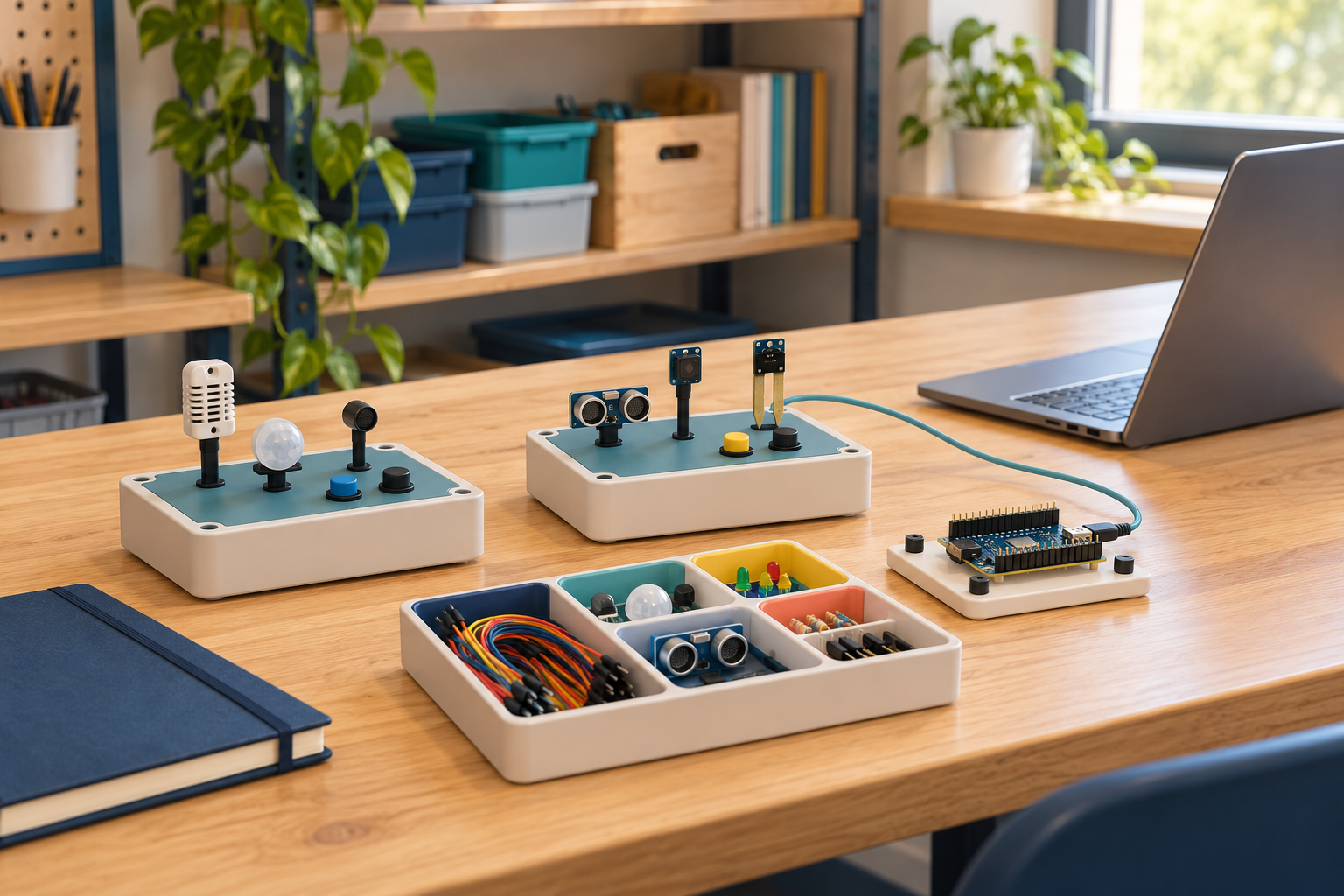
TESTED OFFLINE PROJECT
Run the synthetic telemetry project
Download original code and a 16-record fixture. Review 29 passing software tests, rejected inputs, stale data and traceable demo alerts.
BUILDER FOUNDATIONS LEARNING PATH
Build your first observable sensor system
Follow six readings to prepare a sensor-system build record: hardware limits, firmware versions, messages, logs, failure tests and maintenance.
RELATED READING
Build your first IoT project: from requirement to reproducible record
Define a small experiment and keep enough detail to reproduce it.
RELATED READING
IoT explained: follow a sensor reading to a useful action
Follow the measurement, network, processing and useful response.

RELATED READING
IoT in education: learning projects and accountable classrooms
Connect project work to a learning objective and responsible supervision.
RELATED READING
Internet of Senses: practical interfaces and speculative claims
Distinguish documented interaction methods from speculative promises.